
Use this simple peptide reconstitution calculator to determine the correct volume and syringe units required after mixing a peptide vial with bacteriostatic water. This tool helps researchers calculate accurate dosing volumes when preparing peptides for laboratory use.
Lyophilized peptides are typically supplied as a dry powder inside sterile vials. Before use in research applications, the peptide must be reconstituted using bacteriostatic water. The amount of water added determines the final concentration of the peptide solution.
Once the peptide has been dissolved, researchers can measure precise doses using insulin syringes. Because insulin syringes are marked in units, this calculator converts the required volume into syringe units to simplify accurate measurement.
Most peptide researchers use U-100 insulin syringes for accurate measurement. A U-100 syringe contains 100 units per 1 mL of liquid. This means each unit equals 0.01 mL.
By converting dose volumes into syringe units, it becomes much easier to measure consistent quantities from a reconstituted peptide vial.
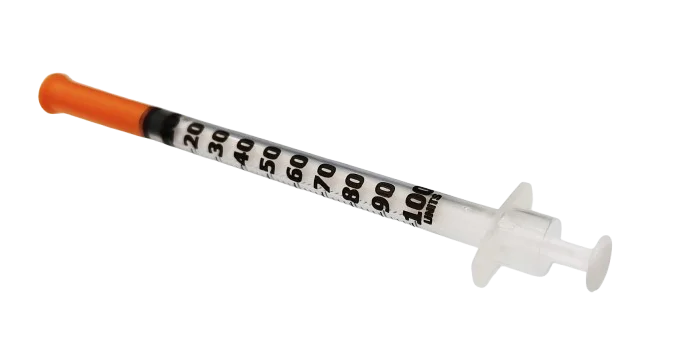
If a 5mg peptide vial is mixed with 2mL of bacteriostatic water, the resulting concentration is 2500mcg per mL. A research dose of 250mcg would therefore equal 0.1mL of liquid, which corresponds to 10 units on a U-100 insulin syringe.
Precise reconstitution is essential for maintaining reliable research conditions. Incorrect mixing ratios can result in inconsistent concentrations and unreliable experimental results.
Using a peptide calculator helps researchers determine accurate volumes quickly and reduces the chance of measurement errors when preparing peptide solutions.
This calculator is provided for informational and research purposes only. Peptides supplied by Peptide Group are intended strictly for laboratory research and analytical use. They are not intended for human consumption or therapeutic use.